
Parrotlets
$340.00
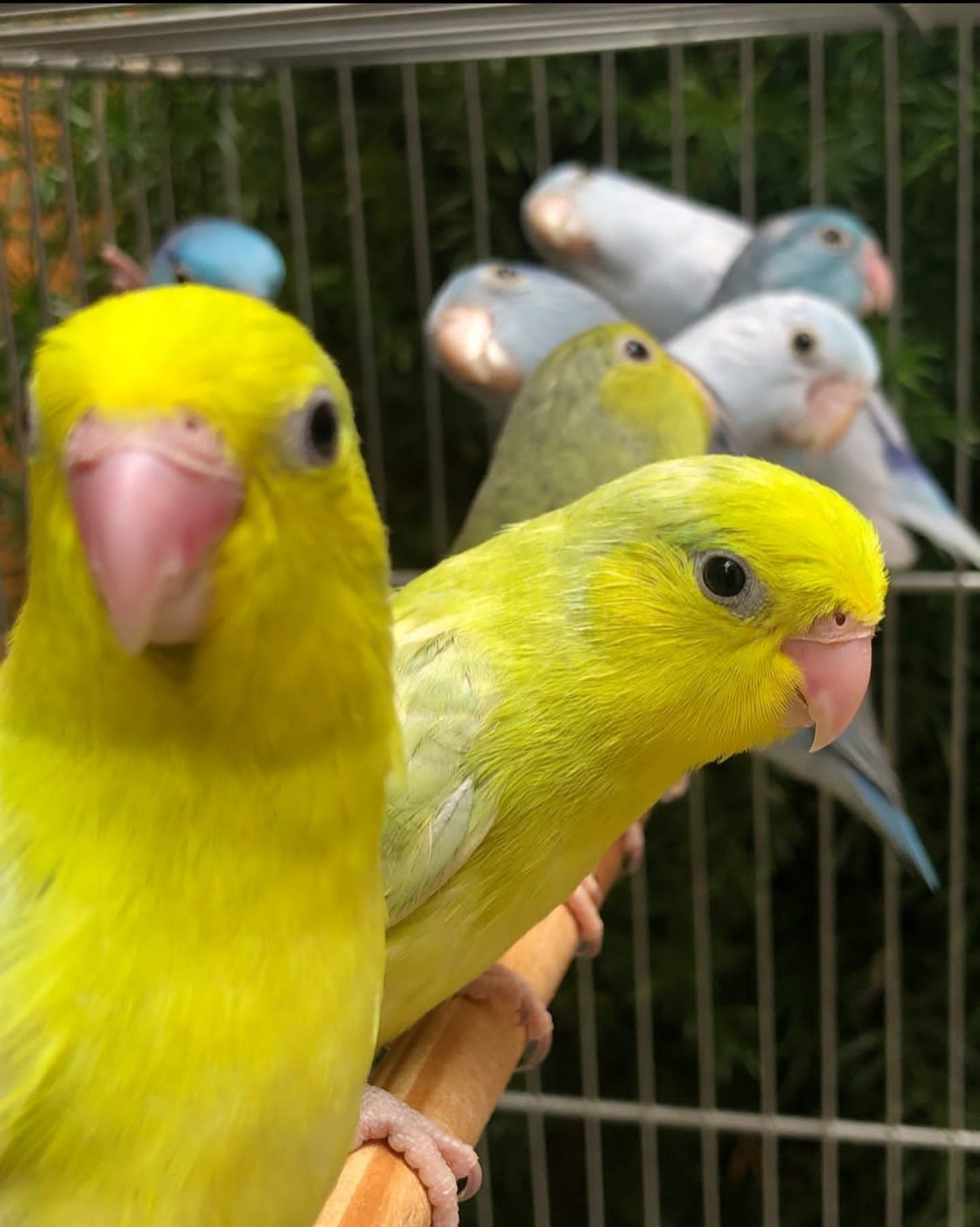
Parrotlets are the smallest members of the true parrot family in the Americas — compact, feisty little birds that pack a disproportionately large personality into their tiny frames. Native to South and Central America, Parrotlets are known for their bold, fearless characters, often acting as though they are far larg…
Looking for parrotlets for sale from a breeder who actually knows these birds? The Pacific Parrotlet (Forpus coelestis) — nicknamed the “pocket parrot” — is the smallest true parrot in the Americas, yet carries the personality of a bird ten times its size. Bold, intelligent, and deeply bonded to their owners, parrotlets are among the most rewarding companion birds available today. Our hand-raised parrotlet birds are socialized from the nest and ready to become a treasured part of your family. Starting at $340 — contact us for current availability and parrotlet pricing.
Why Parrotlets Make Exceptional Pets
Don’t let the size fool you. A parrotlet is essentially a miniature Amazon parrot in character — fearless, opinionated, curious, and deeply attached to their person. They are intelligent enough to learn words and tricks, compact enough for any living situation, and quiet enough for apartments and condos where larger parrots would cause problems. They typically live 15–20 years with proper care, making them a genuine long-term companion. Some individuals learn to whistle tunes, mimic household sounds, and even speak a handful of words — though their primary appeal is their feisty, engaging personality rather than talking ability.
Parrotlets are also one of the few parrot species considered allergy-friendly. Unlike cockatiels and cockatoos — which are powder-down birds that produce fine feather dust — parrotlets clean their feathers using an oil gland, producing significantly less airborne particulate. If you or a family member has bird allergies, parrotlets are worth considering.
Available Parrotlet Colors & Mutations
Pacific Parrotlets come in a wide range of captive-bred color mutations. We stock various colors depending on season — contact us to ask about current availability and parrotlet prices by color:
- Green (Normal) — the classic wild-type coloring; vivid green with blue markings on males
- Blue — replaces green with soft blue tones; highly popular
- Turquoise — a blue-green intermediate that is stunning in good light
- Yellow (American) — bright yellow plumage with lighter markings
- Lutino — yellow-white plumage with red eyes; males show white where blue would normally appear
- Albino — pure white with pink eyes; one of the rarest and most sought-after mutations
- Pied — irregular patches of color on white base; no two birds are identical
- Pastel (Marbled) — softened, washed-out version of standard colors with a watercolor quality
- Fallow — warm brown-green tones with red or pink eyes
- Grey / Grey Pied — uncommon and striking; great for collectors
- Dark Factor / Olive — deeper, richer versions of green and blue base colors
Compound mutations (e.g. Turquoise Pastel, Blue Pied) are also produced periodically. Ask us what’s currently available when you buy your parrotlet.
Sexing Parrotlets — Male vs Female
Pacific Parrotlets are visually sexable once mature, which is a significant advantage over many other small parrot species:
- Males — have bright blue eye streaks, royal blue wing tips, and a blue rump. Bold, more likely to vocalize and talk.
- Females — lack the royal blue markings entirely in most mutations. Can have a slight turquoise tint on the rump in some varieties but no dark blue.
- Lutino males — show white where dark blue would normally appear on a green bird.
- Albino males — the blue can be seen under certain lighting angles; females lack this.
- Pastel/Marbled varieties — check under the wing for darker blue to confirm males; this is the most reliable indicator in this mutation.
Both sexes make excellent pets. Males are slightly more likely to vocalize and talk; females can sometimes be more independent. Individual personality matters more than sex in most cases.
Training & Socialization
Parrotlets have a reputation for being stubborn — and it’s partly earned. There is an important difference between a hand-fed baby and a hand-tame baby, and socialization at the right developmental stage is what creates a genuinely tame bird. Our babies are worked with consistently from the time they leave the nest — not just fed by hand, but handled, stepped up, and exposed to daily household activity so they arrive at their new home already comfortable with people.
By the time they leave us (at approximately 8 weeks old), our parrotlet babies know how to step up reliably and are comfortable being held. We will brief you on where each individual bird is in its training and what to focus on when it arrives home. The key things to maintain tameness at home:
- Handle your bird for at least 20–30 minutes daily — consistency is everything
- Always use the “step up” command before picking up; repeat it until it becomes automatic
- Keep only one parrotlet per cage — two birds bonded to each other will lose their bond with you
- Avoid mirrors in the cage — parrotlets may become hormonal and territorial toward their own reflection
- Never punish or blow at a parrotlet — they respond to positive reinforcement only
Cage Setup
Despite their small size, parrotlets are active and need adequate space. Recommended setup:
- Minimum cage size: 18″ × 18″ × 18″ for one bird — larger is always better
- Bar spacing: ½” or less — wider bars allow parrotlets to stick their heads through and get stuck
- Perches: 2–3 perches of varying diameters (⅝” to ½”) to promote foot health; a calcium pedicure perch helps with nail maintenance
- Toys: Rope toys, chewable wooden toys, small foraging toys, and cat jingle balls with grip holes are favorites. Hamster exercise wheels attached to the cage are a huge hit with many parrotlets.
- Avoid: Fleece tents with loose fibers that can be ingested; mirrors; and any cookware or appliances with Teflon/PTFE coatings — the fumes are lethal to all birds, and parrotlets’ small body mass makes them especially vulnerable.
Diet & Nutrition
A well-fed parrotlet is a healthy parrotlet. We wean our babies primarily onto high-quality pellets, which we recommend as the dietary foundation:
- Pellets (staple): A quality small parrot pellet such as Roudybush Adult Maintenance (mini or crumble size) should make up 60–70% of the diet. Pellets provide complete, balanced nutrition that seeds alone cannot.
- Seed mix (supplement): A small amount of quality finch or cockatiel seed mix a few times per week is fine. Choose blends low in sunflower and safflower to limit excessive fat intake.
- Fresh fruits: Strawberries, apple (no seeds), banana, mango, peeled kiwi, blueberries, grapes, cranberries, and orange in small pieces.
- Fresh vegetables: Broccoli, peas, carrots, green beans, kale, spinach, and corn. Fresh, thawed frozen, and lightly steamed are all acceptable.
- Sprouted seeds: High in nutritional value and easy to digest — excellent as a daily supplement.
- Treats: Millet spray is a comfort food and great for bonding; offer a small piece for the first few days in a new home to reduce stress. Nutriberries work well as enrichment treats.
- Water: Fresh, clean water daily. A cage-mounted water bottle keeps water clean; a shallow dish doubles as a bathing spot.
Never feed: avocado, chocolate, onion, garlic, caffeine, alcohol, or anything with xylitol. These are toxic to all parrots.
Frequently Asked Questions
What is the parrotlet price?
Our parrotlets for sale start at $340 for standard green and blue mutations. Rarer mutations such as Albino, Lutino, Pied, and compound mutations are priced higher based on rarity and availability. Contact us for a current price list — we’re transparent about costs and happy to help you find the right bird for your budget.
Are parrotlets good for apartments?
Parrotlets are one of the best parrot choices for apartment living. They are substantially quieter than conures, amazons, or macaws — most vocalization is soft chattering rather than loud screaming. Their small size means practical cage placement in any living space. Combined with their oil-gland (low-dander) feather maintenance, they work well in shared housing situations.
Can parrotlets be kept with other birds?
No — parrotlets should be housed alone or in bonded same-species pairs managed carefully. They are highly territorial and have been known to seriously injure birds much larger than themselves. If you want to add a second parrotlet later, introduce them on neutral territory with close supervision, and keep separate cages initially.
Do parrotlets talk?
Some individuals do — typically males — learning a handful of words and phrases, particularly if consistently talked to from a young age. They are not as reliably prolific talkers as budgies or African Greys, but many parrotlet owners are pleasantly surprised. Whistling tunes and mimicking household sounds (microwave beeps, ringtones) is common even in birds that don’t form words.
How long do parrotlets live?
A well-cared-for parrotlet typically lives 15–20 years. This makes buying a parrotlet a meaningful long-term commitment — which is why we take socialization and health seriously before any bird leaves our facility.
Do you ship parrotlets?
Yes — we ship parrotlets for sale nationwide. All shipping is done with the bird’s safety and comfort as the priority, using airline-approved methods with appropriate climate and timing considerations. Contact us to discuss your location and current shipping arrangements.
Related Pages
Parrots category page | Cockatiel | Green-Cheeked Conure Handfed | Quaker Parrot
Be the first to review “Parrotlets”
Related products

Parrots

Parrots
Parrots
Parrots

Parrots
Parrots
Parrots
Parrots
Reviews
There are no reviews yet.