
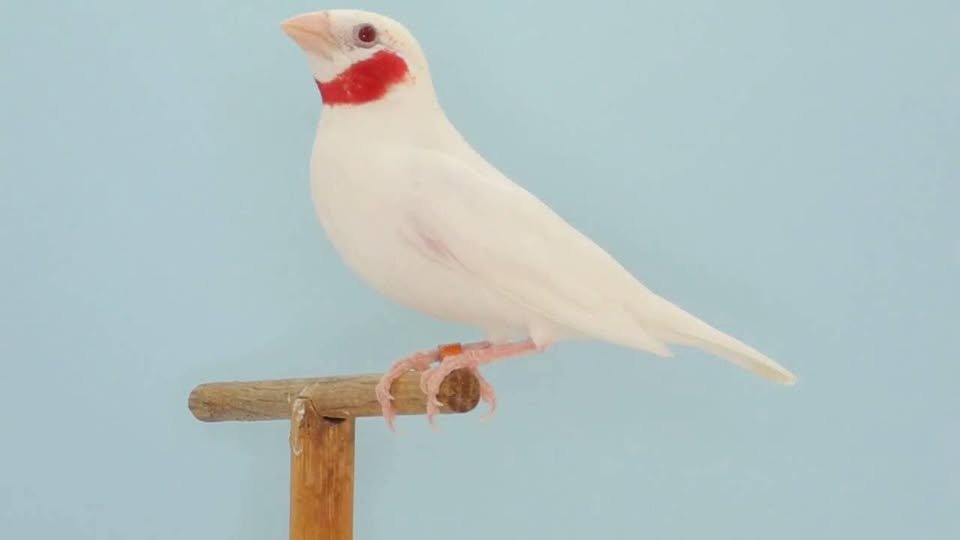
Albino cutthroat finch
$450.00
The Cutthroat Finch (Amadina fasciata) — also known as the Ribbon Finch — is an African finch named for the distinctive band of crimson-red that crosses the male’s throat like a scarlet ribbon. The Albino form is rare in aviculture, featuring white plumage while retaining the characteristic red throat marking in mal…
Searching for a cutthroat finch for sale — and specifically the rare albino form? You’ve found the right place. The Albino Cutthroat Finch (Amadina fasciata) is one of the most striking mutations in aviculture: brilliant white plumage set against the male’s signature crimson throat band, creating a contrast that turns heads in any aviary. Contact us for current cutthroat finch pricing and availability — albino birds are produced in limited numbers each season.
About the Albino Cutthroat Finch
The Cutthroat Finch — also called the Ribbon Finch — is a medium-sized African finch native to the dry savannas and open scrublands of sub-Saharan Africa. Males of the normal form carry a bold band of crimson-red across the throat, earning the species its vivid common name. In the albino mutation, the entire plumage converts to pure white with pink eyes, yet males retain their iconic red throat marking — making them genuinely spectacular birds. Females lack the throat band in both normal and albino forms. The albino mutation is recessive, meaning it requires specific genetic pairing to produce consistently, which is why albino cutthroat finches for sale are considerably rarer than normal-colored birds.
Temperament & Compatibility
Cutthroat Finches are bold, confident birds with an engaging personality. They are active and social, doing well in mixed finch aviaries with appropriately sized companions. Males can become territorial during breeding season, particularly toward other males of the same or similarly marked species, so monitor for aggression and provide plenty of space. Outside of breeding, they are generally good community birds. The albino form behaves identically to the normal Cutthroat — the mutation affects only appearance, not temperament or hardiness.
Housing Requirements
Cutthroat Finches adapt well to both cage and aviary keeping, though they thrive best with room to fly. A spacious flight cage (minimum 36″ wide for a pair) or planted outdoor/indoor aviary is ideal. They appreciate perches at varying heights, some shelter within the aviary, and visual barriers to reduce stress between pairs during breeding. Being from dry African environments, they tolerate warm, dry conditions well but should be protected from damp and cold drafts.
Diet & Nutrition
The Cutthroat Finch is primarily a seed eater and does well on a quality mixed finch or foreign finch seed blend. Key dietary elements include:
– Mixed foreign finch seed as the staple
– Millet sprays — a favorite treat and behavioral enrichment
– Sprouted seeds for improved nutrition and digestibility
– Egg food and livefood (mealworms, waxworms) during breeding season to support chick development
– Fresh greens: chickweed, spinach, dandelion
– Cuttlebone and mineral grit for calcium and beak conditioning
– Fresh clean water changed daily
The albino mutation carries no special dietary requirements — care is identical to the normal form.
Breeding the Albino Cutthroat Finch
Cutthroat Finches breed readily in captivity when given suitable conditions. Provide enclosed nest boxes (budgie-style boxes work well) or wicker nesting baskets positioned in sheltered aviary locations. The hen lays 4–6 eggs per clutch, with incubation around 12–13 days. Both parents share incubation and chick-rearing duties. Increase protein intake (egg food, livefood) once eggs are laid and throughout the fledging period. To produce albino offspring consistently, both parents must carry the albino gene — splitting birds can also produce albinos when paired correctly. This genetic requirement is why genuine albino cutthroat finches command a premium over normal-colored birds.
Frequently Asked Questions
How much does a cutthroat finch cost?
Cutthroat finch prices vary based on color form, age, and availability. Normal Cutthroat Finches are more common; the albino mutation commands a higher price due to limited breeding availability. Contact us directly for current cutthroat finch pricing — we’re upfront about costs and happy to discuss what we have available.
Where can I buy an albino cutthroat finch for sale?
Albino Cutthroat Finches are rarely stocked by pet shops — your best source is a specialist finch breeder. We breed and raise our birds in proper aviary conditions, and our albino birds are produced from proven genetic stock. Contact us to check current availability and join our waitlist when stock is limited.
Is the Ribbon Finch the same as the Cutthroat Finch?
Yes — “Ribbon Finch” and “Cutthroat Finch” refer to the same species, Amadina fasciata. The “ribbon” name references the same crimson throat band, just described differently. You may also see them listed as Amadina or Cutthroat Amadina in aviculture catalogues.
Are cutthroat finches good for beginners?
The normal Cutthroat Finch is considered a moderately beginner-friendly finch — hardy, a good eater, and not overly demanding. The albino form requires the same care level but is better suited to breeders with some finch experience, as managing the genetics for consistent albino production requires an understanding of recessive mutations.
Do cutthroat finches need live food?
Live food is not strictly required year-round, but it significantly benefits breeding pairs and chick development. Small mealworms, waxworms, or ant eggs during the breeding and fledging period improve chick survival rates noticeably. Outside of breeding season, egg food and sprouted seeds provide adequate supplemental protein.
Related Pages
Finchies category page | Java Finch | Strawberry Finch | Owl Finch
Be the first to review “Albino cutthroat finch”
Related products
Finchies
Finchies
Finchies

Finchies

Finchies

Finchies

Finchies
Finchies
Reviews
There are no reviews yet.